By Jefferson Graham, USA TODAY
Hoping to beef up the underperforming online calendar market, Internet search giant Google late Wednesday introduced a calendar service notable for easy-access sharing among friends and family.
Unlike popular online calendars from AOL, Yahoo and Microsoft's MSN, Google's calendar allows multiple people to layer information, so that Mom, Dad and the kids can all see their combined events on one page.
With AOL, Yahoo and MSN calendars, information can be e-mailed to family and friends, or posted online at a Web address, but not easily combined. Microsoft's Outlook, hugely popular with businesses, offers shared calendars, but companies must pay hefty server fees for the feature.
Google product manager Carl Sjogreen says the company added calendars to its arsenal of consumer services because Google users "wanted to see a new approach to calendars. Our mission is to organize the world's information, and one piece of information people care about a lot is what they're doing every day."
Google's calendar is ad-free, but the company hopes to profit by having users spend more time with Google, where they will see ads on other pages.
MSN and Yahoo calendars also are ad-free, while AOL's is ad-supported.
Allen Weiner, an analyst at research firm Gartner, says Google Calendar is "the first major calendar innovation in years. Google has created a very simple platform that allows a lot of user collaboration."
According to market tracker Nielsen/NetRatings, none of the three big free calendar Web programs have extremely high usage. AOL is first, with 2.9 million users in March, to Yahoo's 2.4 million and MSN's 1.3 million.
JupiterResearch analyst David Card says the online calendar programs don't get more traction because, "They're too hard to use. There are too many steps and clicks to make."
Google's challenge is "teaching consumers how to use the program and show them why their calendar is easy," he says.
Google's calendar is free and open to anyone with Internet Explorer or Firefox Web browser. Users need to sign up for a free Google account if they don't already have one.
People who have a Google Gmail e-mail account get an extra feature not normally found in calendar programs. If an e-mail suggests "meeting Wednesday at 9," or something similar, the information can be added to the calendar with one click from the e-mail program.
Gmail is still technically in "beta" test mode, but anyone can sign up by providing their cellphone number to Google.
New calendar events can be created with fewer steps than competing programs, and they can be dragged and dropped to new spots on the calendar.
While Google puts a new face on calendar programs, it lags behind Yahoo and AOL in allowing users to sync information to portable devices such as cellphones and personal digital assistants.
Google says it will add sync functionality in the coming months.
Thursday, April 13, 2006


Now playing...
Joe Pass, Niels-Henning Orsted Pedersen - CHOPS

1. Have You Met Miss Jones
2. Oleo
3. Lover Man
4. 5 Pound Blues
5. Come Rain Or Come Shine
6. Quiet Nights Of Quiet Stars
7. Tricrotism
8. Old Folks
9. Yardbird Ste
10. In Your Own Sweet Way
1. Have You Met Miss Jones
2. Oleo
3. Lover Man
4. 5 Pound Blues
5. Come Rain Or Come Shine
6. Quiet Nights Of Quiet Stars
7. Tricrotism
8. Old Folks
9. Yardbird Ste
10. In Your Own Sweet Way
Monday, April 03, 2006
At last, movies to keep arrive on Net
By Saul Hansell
The New York Times
Published: April 2, 2006, 8:50 PM PDT
Six major studios on Monday plan to begin selling movies over the Internet that buyers can download and keep for watching at any time.
Until now, the only downloads the studios have offered have been online rentals, which can be watched only for a 24-hour period--an idea that has not caught on with consumers. But the high prices and technological limits of the new permanent downloads suggest that they may not be an instant hit.
New movies will cost about $20 to $30 to download; older titles will cost as little as $10. The downloads will be available on the same day that the DVD is released--quicker than rentals, which are put online about 45 days later and cost $2 to $5.
The studios hope that more people will want to own digital copies of movies, just as more people pay to download songs than sign up for online music subscription services that require a monthly fee. Download sales have been discussed for several years in Hollywood, but the studios have been spurred to action by the success of television programs sold through Apple Computer's iTunes Music Store.
"The Internet has really come of age now, and it is a viable method of distributing our content," said Rick Finkelstein, the president of Universal Pictures, a unit of NBC Universal, who noted that the studio's sales through iTunes have been much greater than he expected. Moreover, Universal's research showed that the majority of those downloads were watched on computer screens, not video iPods, indicating that people are willing to watch video on their PCs.
Starting Monday, nearly 300 films will go on sale through Movielink, which until now has been largely an online rental site. Movielink (owned by Warner Brothers, a unit of Time Warner; Sony Pictures; Universal; MGM; and Paramount, a unit of Viacom) will offer films from all of its owners and from 20th Century Fox, owned by the News Corp.
Another movie site, CinemaNow, will start selling downloadable versions of about 75 movies from Sony, MGM and Lions Gate, which owns a large stake in CinemaNow. Curt Marvis, the chief executive of CinemaNow, said he was talking to other studios about selling downloads.
Apple, Amazon.com and other online retailers are also busily trying to cut deals with Hollywood to sell downloads, according to several studio executives. In general, the studios want to make downloads available on largely the same terms, in as many places as possible.
"We are talking to a lot of people, and hopefully our movies will be on many other sites shortly," Finkelstein said.
For now, these movie downloads are a bit cumbersome, and the studios have limited the way they can be watched. A movie will need about 1 gigabyte of hard-drive space and will take an hour or two to download using a high-speed Internet connection. CinemaNow will allow the movies to be played only on a single computer. Movielink will allow the movie to be copied onto a DVD, from which the movie can be downloaded to two other computers, but it cannot be played on a conventional DVD player.
Nor can the movies be copied to Apple's video iPod or the much less popular handheld video players that use software from Microsoft. The studios expect to permit downloads to portable devices later this year.
For now, it is difficult but not impossible to watch the downloaded movies on a television. Some computers, like those using Microsoft's Windows Media Center, are designed to be connected to a television in the living room.
When Movielink's customers rent movies, only about 15 percent watch them on a television, said Jim Ramo, Movielink's chief executive. A third use a laptop computer, and the rest use a desktop computer.
"Fixing the 'last 10 foot' problem of getting the TV set connected to the Internet is starting to happen this year," Ramo said, referring to the resolution of technical hurdles.
The downloads do not include the bonus features, like deleted scenes and filmmaker interviews, that often accompany DVDs.
Industry executives say these limitations will dampen the appeal of downloads, particularly because the services must compete with chain stores and Web retailers that often discount DVD's to below their wholesale cost to attract shoppers. Such low-priced items are known among retailers as "loss leaders."
For example, "Memoirs of a Geisha," from Sony, will cost $19.99 to download from CinemaNow and $25.99 from Movielink. As a DVD, by contrast, it is priced at $16.87 at Wal-Mart. "King Kong," from Universal, which will cost $19.99 from both download services, is being sold on DVD for $14.96 by Amazon.com and $13.99 by Circuit City.
"They are giving the consumer less and charging more for it," said Warren N. Lieberfarb, the former president of Warner Home Video and now an entertainment technology consultant. "To me this really stacks the deck against mass consumer adoption."
One major advantage of sales over rentals online is that the studios would be free to sell a much greater proportion of their film library because there would be less conflict with the exhibition contracts between the studios and the TV networks. Online rentals are limited to the period when movies are on cable pay-per-view services, which is generally for a few months starting 45 days after the DVD is released.
Some studios, including Warner and Universal, plan to withdraw some movies from online sales in the period that they are appearing on pay TV networks like HBO.
Marvis of CinemaNow said he believed the studios had set their price for downloads too high.
"Customers expect prices to be cheaper online than in a retail environment, whether that is for diamonds or cars or airplane tickets," he said. He predicted that the studios would quickly improve the features and lower prices to appeal to consumers.
The New York Times
Published: April 2, 2006, 8:50 PM PDT
Six major studios on Monday plan to begin selling movies over the Internet that buyers can download and keep for watching at any time.
Until now, the only downloads the studios have offered have been online rentals, which can be watched only for a 24-hour period--an idea that has not caught on with consumers. But the high prices and technological limits of the new permanent downloads suggest that they may not be an instant hit.
New movies will cost about $20 to $30 to download; older titles will cost as little as $10. The downloads will be available on the same day that the DVD is released--quicker than rentals, which are put online about 45 days later and cost $2 to $5.
The studios hope that more people will want to own digital copies of movies, just as more people pay to download songs than sign up for online music subscription services that require a monthly fee. Download sales have been discussed for several years in Hollywood, but the studios have been spurred to action by the success of television programs sold through Apple Computer's iTunes Music Store.
"The Internet has really come of age now, and it is a viable method of distributing our content," said Rick Finkelstein, the president of Universal Pictures, a unit of NBC Universal, who noted that the studio's sales through iTunes have been much greater than he expected. Moreover, Universal's research showed that the majority of those downloads were watched on computer screens, not video iPods, indicating that people are willing to watch video on their PCs.
Starting Monday, nearly 300 films will go on sale through Movielink, which until now has been largely an online rental site. Movielink (owned by Warner Brothers, a unit of Time Warner; Sony Pictures; Universal; MGM; and Paramount, a unit of Viacom) will offer films from all of its owners and from 20th Century Fox, owned by the News Corp.
Another movie site, CinemaNow, will start selling downloadable versions of about 75 movies from Sony, MGM and Lions Gate, which owns a large stake in CinemaNow. Curt Marvis, the chief executive of CinemaNow, said he was talking to other studios about selling downloads.
Apple, Amazon.com and other online retailers are also busily trying to cut deals with Hollywood to sell downloads, according to several studio executives. In general, the studios want to make downloads available on largely the same terms, in as many places as possible.
"We are talking to a lot of people, and hopefully our movies will be on many other sites shortly," Finkelstein said.
For now, these movie downloads are a bit cumbersome, and the studios have limited the way they can be watched. A movie will need about 1 gigabyte of hard-drive space and will take an hour or two to download using a high-speed Internet connection. CinemaNow will allow the movies to be played only on a single computer. Movielink will allow the movie to be copied onto a DVD, from which the movie can be downloaded to two other computers, but it cannot be played on a conventional DVD player.
Nor can the movies be copied to Apple's video iPod or the much less popular handheld video players that use software from Microsoft. The studios expect to permit downloads to portable devices later this year.
For now, it is difficult but not impossible to watch the downloaded movies on a television. Some computers, like those using Microsoft's Windows Media Center, are designed to be connected to a television in the living room.
When Movielink's customers rent movies, only about 15 percent watch them on a television, said Jim Ramo, Movielink's chief executive. A third use a laptop computer, and the rest use a desktop computer.
"Fixing the 'last 10 foot' problem of getting the TV set connected to the Internet is starting to happen this year," Ramo said, referring to the resolution of technical hurdles.
The downloads do not include the bonus features, like deleted scenes and filmmaker interviews, that often accompany DVDs.
Industry executives say these limitations will dampen the appeal of downloads, particularly because the services must compete with chain stores and Web retailers that often discount DVD's to below their wholesale cost to attract shoppers. Such low-priced items are known among retailers as "loss leaders."
For example, "Memoirs of a Geisha," from Sony, will cost $19.99 to download from CinemaNow and $25.99 from Movielink. As a DVD, by contrast, it is priced at $16.87 at Wal-Mart. "King Kong," from Universal, which will cost $19.99 from both download services, is being sold on DVD for $14.96 by Amazon.com and $13.99 by Circuit City.
"They are giving the consumer less and charging more for it," said Warren N. Lieberfarb, the former president of Warner Home Video and now an entertainment technology consultant. "To me this really stacks the deck against mass consumer adoption."
One major advantage of sales over rentals online is that the studios would be free to sell a much greater proportion of their film library because there would be less conflict with the exhibition contracts between the studios and the TV networks. Online rentals are limited to the period when movies are on cable pay-per-view services, which is generally for a few months starting 45 days after the DVD is released.
Some studios, including Warner and Universal, plan to withdraw some movies from online sales in the period that they are appearing on pay TV networks like HBO.
Marvis of CinemaNow said he believed the studios had set their price for downloads too high.
"Customers expect prices to be cheaper online than in a retail environment, whether that is for diamonds or cars or airplane tickets," he said. He predicted that the studios would quickly improve the features and lower prices to appeal to consumers.
Why Sony Should've Put Its Weight Behind Hi-MD
By Thom Holwerda
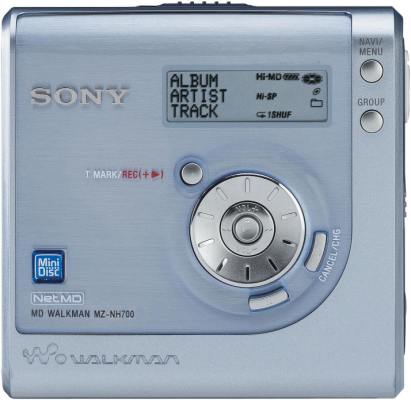
Currently, .mp3 players are all the hype. Everyone has one, and if you don't, you're old-fashioned. I do not have an .mp3 player. I tried to have one, but for various reasons it did not please me. I'm a MiniDisc guy. I've always been. MiniDisc has some serious advantages over .mp3 players, whether they be flash or HDD based. Note: Sunday Eve Column.
First of all, MiniDisc players are much more sturdy than HDD players. You have to treat HDD players with a lot of care, because dropping one kills the harddrive easily. MiniDisc players, on the other hand, can be dropped down stairs, or while riding your bike, and they still work mighty fine (I know this out of experience). They will even survive a bath of Coca Cola (don't ask, but I have experience with that as well). Try bathing your EUR 330 iPod in some Coca Cola.
This durability of course extends to the discs themselves. They are completely enclosed in a hard, extremely durable plastic cover. They are also quite small, measuring only 5x72x68mm. You can play tennis with them, throw them around, yes, even run a bike over them: they'll survive.
Secondly, MiniDisc offers unlimited storage space. The new Hi-MD format offers 1GB per disc (which can add up to 45 hours of music on one disc)-- and a disc only costs a few Euros. This in essence gives you unlimited storage space, but of course it does come at a certain cost, because you have to carry those MDs around. But seeing many just use their music players to commute or during some running through the park, 1GB should be enough. Now, compare that to say, flash players which have limited storage space, and storage space you need to update every time you want to listen to different music. And even though HDD-based players offer a lot more space, this space is, in the end, limited too. And as mentioned above, they are much more fragile.
An interesting plus to Sony's new Hi-MD format is that it's completely backwards compatible with the previous MD standards (MD, MDLP, and NetMD). In fact-- formatting an ordinary MD using the Hi-MD filesystem actually doubles its original capacity from 170MB to 305 MB!
Another huge advantage over .mp3 players is MD's recording capability. Portable MD recorders aren't called recorders for nothing: you can record at any time, any place, any way you wish. Digitally via optic cables or USB, or analog via a microphone (whether built-in or external) or analog cables connected to i.e. an old tape deck. This is a major advantage, and one of the reasons why MD is often associated with field recording.
Lastly, portable recorders have an extremely good battery life. My lower-end recorder, for instance, plays back for 30 hours using only one AA battery.
Now, a common and valid complaint about MiniDisc was that they were tied to Sony in that you were forced to use Sony's ATRAC format and SonicStage software. And I am putting it mildly when I say that SonicStage is a complete pile of steaming crap. But, an update to Sony's Hi-MD line-up last year added .mp3 support for Hi-MD: 2nd and 3rd generation Hi-MD recorders you buy have support for .mp3 files. However, a major malfunction remains: SonicStage. Even though each Hi-MD player can be used as a mass storage device under windows, Linux, OSX, and even BeOS, you cannot just drag/drop .mp3s onto it. You are forced to use SonicStage. Apple may force one to use iTunes to transfer songs to iPod, but at least iTunes is not a steaming pile of crap. And of course SonicStage is only available on Windows, not on OSX or Linux (Sony did announce Mac support for its upcoming high-end Hi-MD recorder, I can't wait for prices on that thing).
Another complaint that often reared its head was MD's lack of capabilities for storing non-music data. Besides the utterly failed MD-Data experiment Sony conducted in the '90s, MDs could never store data, like flash/HDD .mp3 players could. This has been fixed too: Hi-MD allows you to store any type of data on both Hi-MD discs as well as old MDs (with the mentioned storage capacities). As said, Hi-MD recorders act as ordinary mass storage devices, so any OS with drivers for that will work fine with Hi-MD recorders.
And now the ever important aspect of price. Before the .mp3 player revolution, MDs only competitors were CDs and before that, tapes. Technologically, they both do not stand a chance. However, they of course were much more popular because they were a hell of a lot cheaper: my first portable MD recorder cost a staggering Fl. 499,-, which is EUR 225. Portable CD players at that time only cost about Fl. 100,- to Fl. 200,- so you can understand how expensive MD recorders were.
Today, this has changed. My Hi-MD recorder (the MZ-NH600 model, so with the input jacks) only cost me EUR 150,-, which is not a lot of money when compared to higher-quality .mp3 players (yes, MiniDisc has always been and always will be a high-quality device. MD users expect that quality).
Given the above advantages, it is a complete mystery why Sony is not putting its full weight behind the MiniDisc format. No, instead of just using an existing, proven technology to power its highly successful PSP, they created a whole new standard altogether, which probably cost them a serious amount of research and thus money. Using Hi-MD in the PSP would have meant a serious push for MD. Sony has even made digital cameras which use the Hi-MD format, but none were ever released to the public. Recently they did release a portable Hi-MD recorder with an integrated 1.3MP camera, but I've never ever seen one in the wild (I'd kill for one).
My take on Sony's refusal to market Hi-MD properly is that Sony somehow seems to think it needs to create a HDD-based .mp3 player to compete with Apple's iPod. Now, I think that that is a pointless battle: you won't beat Apple in its current winning mood. Forget it. It ain't gonna happen. And, Sony's success with this competition kind of supports that claim. If you can't win from Apple on Apple's turf-- then try to beat them on your own turf.
So, what should Sony have done? They shouldn't have made any attempts at making flash or HDD based .mp3 players. They have a very strong technology with Hi-MD and they should've been using it whenever they could. They should've made the lower-end Hi-MD recorders a bit more stylish (historically, only the high-end MD recorders look sleek), should've created a good marketing campaign emphasizing MD's strong points, and they should have increased availability, and most of all: they should've ditched SonicStage, and they should've allowed people to just drag/drop songs onto their recorders.
Now, it's all too late. I'm afraid MiniDisc will slowly but surely die out-- and that will leave me and all of MD's die-hard fans who supported the platform since day one without portable music.
--Thom Holwerda
Currently, .mp3 players are all the hype. Everyone has one, and if you don't, you're old-fashioned. I do not have an .mp3 player. I tried to have one, but for various reasons it did not please me. I'm a MiniDisc guy. I've always been. MiniDisc has some serious advantages over .mp3 players, whether they be flash or HDD based. Note: Sunday Eve Column.
First of all, MiniDisc players are much more sturdy than HDD players. You have to treat HDD players with a lot of care, because dropping one kills the harddrive easily. MiniDisc players, on the other hand, can be dropped down stairs, or while riding your bike, and they still work mighty fine (I know this out of experience). They will even survive a bath of Coca Cola (don't ask, but I have experience with that as well). Try bathing your EUR 330 iPod in some Coca Cola.
This durability of course extends to the discs themselves. They are completely enclosed in a hard, extremely durable plastic cover. They are also quite small, measuring only 5x72x68mm. You can play tennis with them, throw them around, yes, even run a bike over them: they'll survive.
Secondly, MiniDisc offers unlimited storage space. The new Hi-MD format offers 1GB per disc (which can add up to 45 hours of music on one disc)-- and a disc only costs a few Euros. This in essence gives you unlimited storage space, but of course it does come at a certain cost, because you have to carry those MDs around. But seeing many just use their music players to commute or during some running through the park, 1GB should be enough. Now, compare that to say, flash players which have limited storage space, and storage space you need to update every time you want to listen to different music. And even though HDD-based players offer a lot more space, this space is, in the end, limited too. And as mentioned above, they are much more fragile.
An interesting plus to Sony's new Hi-MD format is that it's completely backwards compatible with the previous MD standards (MD, MDLP, and NetMD). In fact-- formatting an ordinary MD using the Hi-MD filesystem actually doubles its original capacity from 170MB to 305 MB!
Another huge advantage over .mp3 players is MD's recording capability. Portable MD recorders aren't called recorders for nothing: you can record at any time, any place, any way you wish. Digitally via optic cables or USB, or analog via a microphone (whether built-in or external) or analog cables connected to i.e. an old tape deck. This is a major advantage, and one of the reasons why MD is often associated with field recording.
Lastly, portable recorders have an extremely good battery life. My lower-end recorder, for instance, plays back for 30 hours using only one AA battery.
Now, a common and valid complaint about MiniDisc was that they were tied to Sony in that you were forced to use Sony's ATRAC format and SonicStage software. And I am putting it mildly when I say that SonicStage is a complete pile of steaming crap. But, an update to Sony's Hi-MD line-up last year added .mp3 support for Hi-MD: 2nd and 3rd generation Hi-MD recorders you buy have support for .mp3 files. However, a major malfunction remains: SonicStage. Even though each Hi-MD player can be used as a mass storage device under windows, Linux, OSX, and even BeOS, you cannot just drag/drop .mp3s onto it. You are forced to use SonicStage. Apple may force one to use iTunes to transfer songs to iPod, but at least iTunes is not a steaming pile of crap. And of course SonicStage is only available on Windows, not on OSX or Linux (Sony did announce Mac support for its upcoming high-end Hi-MD recorder, I can't wait for prices on that thing).
Another complaint that often reared its head was MD's lack of capabilities for storing non-music data. Besides the utterly failed MD-Data experiment Sony conducted in the '90s, MDs could never store data, like flash/HDD .mp3 players could. This has been fixed too: Hi-MD allows you to store any type of data on both Hi-MD discs as well as old MDs (with the mentioned storage capacities). As said, Hi-MD recorders act as ordinary mass storage devices, so any OS with drivers for that will work fine with Hi-MD recorders.
And now the ever important aspect of price. Before the .mp3 player revolution, MDs only competitors were CDs and before that, tapes. Technologically, they both do not stand a chance. However, they of course were much more popular because they were a hell of a lot cheaper: my first portable MD recorder cost a staggering Fl. 499,-, which is EUR 225. Portable CD players at that time only cost about Fl. 100,- to Fl. 200,- so you can understand how expensive MD recorders were.
Today, this has changed. My Hi-MD recorder (the MZ-NH600 model, so with the input jacks) only cost me EUR 150,-, which is not a lot of money when compared to higher-quality .mp3 players (yes, MiniDisc has always been and always will be a high-quality device. MD users expect that quality).
Given the above advantages, it is a complete mystery why Sony is not putting its full weight behind the MiniDisc format. No, instead of just using an existing, proven technology to power its highly successful PSP, they created a whole new standard altogether, which probably cost them a serious amount of research and thus money. Using Hi-MD in the PSP would have meant a serious push for MD. Sony has even made digital cameras which use the Hi-MD format, but none were ever released to the public. Recently they did release a portable Hi-MD recorder with an integrated 1.3MP camera, but I've never ever seen one in the wild (I'd kill for one).
My take on Sony's refusal to market Hi-MD properly is that Sony somehow seems to think it needs to create a HDD-based .mp3 player to compete with Apple's iPod. Now, I think that that is a pointless battle: you won't beat Apple in its current winning mood. Forget it. It ain't gonna happen. And, Sony's success with this competition kind of supports that claim. If you can't win from Apple on Apple's turf-- then try to beat them on your own turf.
So, what should Sony have done? They shouldn't have made any attempts at making flash or HDD based .mp3 players. They have a very strong technology with Hi-MD and they should've been using it whenever they could. They should've made the lower-end Hi-MD recorders a bit more stylish (historically, only the high-end MD recorders look sleek), should've created a good marketing campaign emphasizing MD's strong points, and they should have increased availability, and most of all: they should've ditched SonicStage, and they should've allowed people to just drag/drop songs onto their recorders.
Now, it's all too late. I'm afraid MiniDisc will slowly but surely die out-- and that will leave me and all of MD's die-hard fans who supported the platform since day one without portable music.
--Thom Holwerda
Sunday, April 02, 2006
Japan Launches Free Digital TV Broadcasts for Mobile Phones
TOKYO Apr 1, 2006 (AP)

Digital TV broadcasts for mobile phones equipped with special receivers began in Japan's major urban areas Saturday, following several months of test broadcasts.
But finding new phones in stores proved hard as eager consumers have already snapped up the limited number of handsets on the market. Japan's major mobile carriers say sales are good, but have not disclosed numbers.
Japan's mobile TV service is not the world's first South Korea, Britain and several other nations offer a similar service, although with different technologies. Mobile users in some parts of the United States can also tap into digital broadcasts.
But the new service in Japan, which is free, will potentially reach the broadest market yet through the country's terrestrial digital broadcast system, which relays images through the air via TV towers, not satellites.
It also uses broadcasting air waves, rather than an Internet connection, to relay streaming video.
Japan's 90 million mobile phone users already play video games, download music files, exchange e-mail, read news, trade stocks, store digital photos and surf the Web all on tiny handset screens half the size of a business card.
Digital TV broadcasts for mobile phones equipped with special receivers began in Japan's major urban areas Saturday, following several months of test broadcasts.
But finding new phones in stores proved hard as eager consumers have already snapped up the limited number of handsets on the market. Japan's major mobile carriers say sales are good, but have not disclosed numbers.
Japan's mobile TV service is not the world's first South Korea, Britain and several other nations offer a similar service, although with different technologies. Mobile users in some parts of the United States can also tap into digital broadcasts.
But the new service in Japan, which is free, will potentially reach the broadest market yet through the country's terrestrial digital broadcast system, which relays images through the air via TV towers, not satellites.
It also uses broadcasting air waves, rather than an Internet connection, to relay streaming video.
Japan's 90 million mobile phone users already play video games, download music files, exchange e-mail, read news, trade stocks, store digital photos and surf the Web all on tiny handset screens half the size of a business card.
Saturday, April 01, 2006
Toshiba began selling the first players using the next-generation HD DVD video
TOKYO Mar 31, 2006 (AP)

Toshiba began selling the first players using the next-generation HD DVD video format Friday, beating the rival Blu-ray disc format to market in a high-stakes competition to deliver theater-quality movies to living rooms.
Japanese electronics maker Toshiba Corp. said its HD-XA1, priced at about 110,000 yen ($936) is the world's first commercially available HD DVD player. The product, which has no recording function, is being promised for the United States in April at about $799.
The HD DVD format, also backed by NEC Corp. of Japan, competes against the Blu-ray disc format, supported by Matsushita Electric Industrial Co., which makes Panasonic brand products, and Sony Corp.
Both can deliver dazzling high-definition video and can store much more data than today's DVDs, but are incompatible.
Sony has said it will start selling Blu-ray disc DVD players in the United States in the summer but has not announced a date for Japan sales.
Sony recently postponed until November the sale of its PlayStation 3 video game console, which runs Blu-ray discs and was initially promised for spring. Prices have not been announced.
Matsushita has said its first Blu-ray disc player will be available in the United States in September but has not given a date for when it will sell in Japan. The Osaka-based manufacturer said the price was undecided but will be under $1,500.
HD DVD movies are expected to gradually go on sale starting in April in Japan, including "Finding Neverland," Toshiba said, but the selection is initially even more limited than the titles now being promised for the United States. Films available on next-generation video are expected to grow.
HD DVD is backed by Universal Studios and Warner Bros. as well as Intel Corp. and Microsoft Corp. Blu-ray disc is backed by Sony Pictures Entertainment, Twentieth Century Fox, Apple Computer Inc., Hewlett-Packard Co. and Dell Inc.
Experts say loyalty to either technology among Hollywood studios is likely to be thin, and studios are expected to come out with content for whichever format proves popular.
Toshiba began selling the first players using the next-generation HD DVD video format Friday, beating the rival Blu-ray disc format to market in a high-stakes competition to deliver theater-quality movies to living rooms.
Japanese electronics maker Toshiba Corp. said its HD-XA1, priced at about 110,000 yen ($936) is the world's first commercially available HD DVD player. The product, which has no recording function, is being promised for the United States in April at about $799.
The HD DVD format, also backed by NEC Corp. of Japan, competes against the Blu-ray disc format, supported by Matsushita Electric Industrial Co., which makes Panasonic brand products, and Sony Corp.
Both can deliver dazzling high-definition video and can store much more data than today's DVDs, but are incompatible.
Sony has said it will start selling Blu-ray disc DVD players in the United States in the summer but has not announced a date for Japan sales.
Sony recently postponed until November the sale of its PlayStation 3 video game console, which runs Blu-ray discs and was initially promised for spring. Prices have not been announced.
Matsushita has said its first Blu-ray disc player will be available in the United States in September but has not given a date for when it will sell in Japan. The Osaka-based manufacturer said the price was undecided but will be under $1,500.
HD DVD movies are expected to gradually go on sale starting in April in Japan, including "Finding Neverland," Toshiba said, but the selection is initially even more limited than the titles now being promised for the United States. Films available on next-generation video are expected to grow.
HD DVD is backed by Universal Studios and Warner Bros. as well as Intel Corp. and Microsoft Corp. Blu-ray disc is backed by Sony Pictures Entertainment, Twentieth Century Fox, Apple Computer Inc., Hewlett-Packard Co. and Dell Inc.
Experts say loyalty to either technology among Hollywood studios is likely to be thin, and studios are expected to come out with content for whichever format proves popular.
Friday, March 31, 2006
E-JazzOnline.com Earns Brubeck Endorsement
E-JazzOnline.com Earns Brubeck Endorsement
E-JazzOnline.com, a new website that launched late last year, has earned the endorsement of Jazz legend Dave Brubeck. The state-of-the-art, not-for-profit site was created not only to promote Jazz music, but to also create a venue for Jazz artists to be seen, heard, sold and hired.

Brubeck states, "With all the changes in the music business in recent years, it is increasingly difficult for musicians ... to find a way to distribute and promote their recordings and to become better known to the general public and to club and concert promoters. Through modern technology E-JazzOnline will offer Jazz musicians a showcase for their work and an opportunity for interaction with their fans and potential employers. On behalf of Jazz musicians everywhere, I wish E-JazzOnline success in this new endeavor that seeks to promote, nurture and preserve America's unique art form."
Jillian Algrin, founder of E-JazzOnline and an advertising and marketing executive, knows the importance of advertising and promotion, as well as CD distribution and sales, in determining the success of a CD or career of an artist. Algrin states that E-JazzOnline (EJO) offers Jazz artists an easy, affordable and interactive marketing and distribution solution to this problem.
EJO-registered artists are featured with photos, bios, CD cover art, achievements, and music samples and given "blog" pages to interact with fans and potential employers. All CDs are sold for $20.00, $12.00 of which goes back to the artist and a minimum of $2.00 of which goes to support the Jazz Foundation of America's Jazz Musician Emergency Fund. Remaining funds are used to maintain and promote the site.
E-JazzOnline.com, a new website that launched late last year, has earned the endorsement of Jazz legend Dave Brubeck. The state-of-the-art, not-for-profit site was created not only to promote Jazz music, but to also create a venue for Jazz artists to be seen, heard, sold and hired.
Brubeck states, "With all the changes in the music business in recent years, it is increasingly difficult for musicians ... to find a way to distribute and promote their recordings and to become better known to the general public and to club and concert promoters. Through modern technology E-JazzOnline will offer Jazz musicians a showcase for their work and an opportunity for interaction with their fans and potential employers. On behalf of Jazz musicians everywhere, I wish E-JazzOnline success in this new endeavor that seeks to promote, nurture and preserve America's unique art form."
Jillian Algrin, founder of E-JazzOnline and an advertising and marketing executive, knows the importance of advertising and promotion, as well as CD distribution and sales, in determining the success of a CD or career of an artist. Algrin states that E-JazzOnline (EJO) offers Jazz artists an easy, affordable and interactive marketing and distribution solution to this problem.
EJO-registered artists are featured with photos, bios, CD cover art, achievements, and music samples and given "blog" pages to interact with fans and potential employers. All CDs are sold for $20.00, $12.00 of which goes back to the artist and a minimum of $2.00 of which goes to support the Jazz Foundation of America's Jazz Musician Emergency Fund. Remaining funds are used to maintain and promote the site.
Thursday, March 30, 2006
Wednesday, March 29, 2006


Tuesday, March 28, 2006

Monday, March 27, 2006
Exhibitions in Italy
Wonderful site where you can find all the major exhibitions in Italy.

http://www.informarte.org/portal/modules.php?name=News&new_topic=1
http://www.informarte.org/portal/modules.php?name=News&new_topic=1
Sunday, March 26, 2006
Now playing...

Bill Evans - The Complete Fantasy Recordings
Given the peerless depth of Bill Evans's work for Riverside in the early 1960s (collected in its entirety on The Complete Riverside Recordings) followed by some similarly stellar outings on Verve (collected on the mammoth 18-CD Complete Bill Evans on Verve), it's understandable that the pianist's work from the 1970s might get short shrift. Understandable, but not justified, as this nine-CD set illustrates. Evans's years at Fantasy brought forth some monuments, including his first session of duets with Tony Bennett. His solo and trio work continues to develop over the course of these sessions, all of them corrected for chronology, ignoring earlier albums' track orders. His group playing also shows development, intensified refinement, and an acute collective sense that seems to grow and absorb whoever is on the gig. Tenor saxophonist Harold Land makes a fine showing, as does the underrated, dynamic duo of Lee Konitz and Warne Marsh. Sure, Evans makes the ill-considered stumble of trying to get a Fender Rhodes to reflect his sense of touch and phrasing, but he shows again and again why he is so magnificent a composer, improviser, and group-leading thinker. As he neared his death in 1980, his flow of ideas seems--at least in hindsight--irrepressible, and for that reason, fascinating. --Andrew Bartlett
Go to the Amazon page of this item -->
Friday, March 24, 2006

Thursday, March 23, 2006
Sony takes MiniDisc to Mac

Sony plans to introduce Mac support for its new MiniDisc Walkman for the first time.
The company took the wraps off its all-new MiniDisc product, the MZ-RH1, this morning. This portable device is being marketed as a mobile recording studio.
Sony plans to make the device Mac compatible, “bringing greater choice in digital audio devices to Mac users”.
The company will release Mac software for the new product in “summer 2006”, it said.
The player can handle audio in the following formats: LinearPCM, ATRAC (ATRAC, ATRAC3, ATRAC3plus) or MP3 format.
It will also record audio, with several built-in features to enhance that use. Users can adjust the mode to reflect what they are recording, which could be a live event, their own ‘jam’ session, or a meeting.
The MZ-RH1 will be available from May 2006 across Europe.
Wednesday, March 22, 2006

Dio benedica i Minidisc, e soprattutto gli HI-MD...con un solo disco riesco ad andare avanti giorni, e non devo stare a rompere le scatole per farmi portare pile di CD da ascoltare. Menomale che avevo fatto una bella scorta di MD con musica scaricata che non ho ancora mai sentito...
Diciamo che sono stato profetico!!!!!!
Monday, March 20, 2006
Ciao
Ciao a tutti. Grazie ai prodigi della tecninca (ovvero infermieri compiacenti che mi hanno dato accesso al loro PC fisso) ora ricevo tutta la posta di Gmail su Libero, quindi potete scrivermi o al consueto indirizzo (chico75pi@gmail.com) o a questo PROVVISORIO (michelescasso@libero.it).
Miky
Miky
Monday, March 13, 2006
I'm not available
Hi to everyone,
due to a severe illness I'm stuck at the ospital. The problem is that I cannot check my email from this PC. So...now you now it.
Miky
due to a severe illness I'm stuck at the ospital. The problem is that I cannot check my email from this PC. So...now you now it.
Miky
Friday, February 24, 2006
Google offers users their own pages on Web
Google offers users their own pages on Web
JOINS OTHER FIRMS IN PUSHING COMMUNITY-CREATED CONTENTBy Elise AckermanMercury NewsGoogle continued its effort to spark more user-generated content, unveiling an online service Thursday for creating personal Web pages and offering 100 megabytes of free storage to people who use it.
Demand for ``Google Page Creator'' quickly swamped the free service Thursday morning, causing it to shut down temporarily.
``We decided in advance to limit the number of page sign-ups in order to provide users with an optimal publishing experience,'' spokeswoman Megan Quinn said in a statement. ``Due to extraordinary demand, we recently reached the limit so we have temporarily paused additional sign-ups.''
New sign-ups would be offered ``very soon,'' Quinn said.
Both Google and Yahoo have been expanding beyond Internet search to develop services and technology that let Internet users create and share their own content online. The field of user-generated content is flourishing with video-sharing services like YouTube and networking sites like MySpace.
On Thursday, some online pundits compared Google's new service to Yahoo's GeoCities, an online community of millions of Web-page-based homesteaders that Yahoo acquired in May 1999.
Both Yahoo and Google also offer social networking services that encourage users to record their connections to one another online.
Last year, Yahoo acquired a popular photo-sharing service named Flickr, augmenting its existing photo sharing and storage services. A few months later, Google launched Google Base, a giant database that it invited users to fill with any kind of content they wanted -- photos, job listings and more.
Google's new Web page service complements Blogger, a free online service that lets people publish regularly updated online commentary.
Designed for use by tech novices, Page Creator offers ready-to-use designs and a what-you-see-is-what-you-get interface. The application is browser-based, which means there is no software to download. The hosting is provided by Google for free and a Gmail account is required.
JOINS OTHER FIRMS IN PUSHING COMMUNITY-CREATED CONTENTBy Elise AckermanMercury NewsGoogle continued its effort to spark more user-generated content, unveiling an online service Thursday for creating personal Web pages and offering 100 megabytes of free storage to people who use it.
Demand for ``Google Page Creator'' quickly swamped the free service Thursday morning, causing it to shut down temporarily.
``We decided in advance to limit the number of page sign-ups in order to provide users with an optimal publishing experience,'' spokeswoman Megan Quinn said in a statement. ``Due to extraordinary demand, we recently reached the limit so we have temporarily paused additional sign-ups.''
New sign-ups would be offered ``very soon,'' Quinn said.
Both Google and Yahoo have been expanding beyond Internet search to develop services and technology that let Internet users create and share their own content online. The field of user-generated content is flourishing with video-sharing services like YouTube and networking sites like MySpace.
On Thursday, some online pundits compared Google's new service to Yahoo's GeoCities, an online community of millions of Web-page-based homesteaders that Yahoo acquired in May 1999.
Both Yahoo and Google also offer social networking services that encourage users to record their connections to one another online.
Last year, Yahoo acquired a popular photo-sharing service named Flickr, augmenting its existing photo sharing and storage services. A few months later, Google launched Google Base, a giant database that it invited users to fill with any kind of content they wanted -- photos, job listings and more.
Google's new Web page service complements Blogger, a free online service that lets people publish regularly updated online commentary.
Designed for use by tech novices, Page Creator offers ready-to-use designs and a what-you-see-is-what-you-get interface. The application is browser-based, which means there is no software to download. The hosting is provided by Google for free and a Gmail account is required.
Subscribe to:
Posts (Atom)