| | ||
Working from the original three-strip Technicolor negatives, experts at the Warner Bros studio have removed dirt, dust, debris and scratches. The result, according to the British Film Institute, boasts "amazing image clarity and breathtaking colour". Based on L Frank Baum's 1900 novel, the film stars Judy Garland as a farm girl transported to a magical kingdom. Winner of three Academy Awards, it opens in 40 cinemas across the country on 15 December. Lavish costumes The three-strip Technicolor process - which combined three strips of coloured film - yielded excellent colour quality but was expensive and difficult to handle. That, combined with the lavish sets and costumes, swelled the budget to a then enormous $2.7m. Judy Garland was 16 years old when she won the part of Dorothy - a role she won after MGM decided Shirley Temple's talents were not extensive enough to do it justice. Wicked, a musical based on the witches in The Wizard of Oz, is currently running in London's West End. | ||
Friday, December 01, 2006
Wizard of Oz returns to cinemas


Friday, November 24, 2006
E' morto Philippe Noiret monumento del cinema d'autore - Spettacoli & Cultura - Repubblica.it

PARIGI - E' morto oggi, dopo una lunga malattia, il grande attore francese Philippe Noiret. Lo ha annunciato il suo agente. Aveva 76 anni. Fra i tanti ruoli della sua lunga carriera (130 film in cinquant'anni), all'insegna della grande qualità, al pubblico italiano sono particolarmente cari quelli del proiezionista di Nuovo Cinema Paradiso, regia di Giuseppe Tornatore, e di Pablo Neruda nel Postino di Massimo Troisi.
Nato a Lille in Francia il primo Ottobre 1930, Noiret studia ecitazione con Roger Blin, quindi entra al Théatre National Populaire (TNP) di Jean Vilar, dove lavora per una decina d'anni, coltivando parallelamente il cabaret assieme a Jean-Pierre Darras.
Il suo esordio al cinema - nel 1956, in La pointe courte di Agnes Varda - ha un sapore del tutto occasionale; ma trascorsi altri cinque anni, la sua figura comincia ad apparire con frequenza via via crescente sugli schermi del cinema francese, seppure ancora in ruoli secondari. Nel 1960 è lo zio di Zazie in Zazie nel metrò di L. Malle, nel 1961 recita in Tutto l'oro del mondo di René Clair, nel 1965 è in Parigi brucia? di
Clément (per citare i nomi più noti).
Nel 1969 è accanto a Michel Piccoli in Topaz di Alfred Hitchcock. Ma la vera popolarità arriva negli anni 1970, quando interpreta uno dei quattro amici che vogliono suicidarsi a furia di cibo e sesso in La grande abbuffata di Marco Ferreri (1973), con il quale gira l'anno seguente Non toccare la donna bianca. Sempre nel 1974, sostiene con successo il ruolo drammatico offertogli da Bertrand Tavernier in L'orologiaio di Saint-Paul, riconfermando le sue capacità interpretative l'anno successivo nel Giudice e l'assassino e Che la festa cominci, ancora di Tavernier.
A partire dal 1975, quando recita in Amici miei di Mario Monicelli, la sua carriera si divide tra la Francia e l'Italia. Nel nostro Pese, infatti, nell'arco di tre lustri interpreta diversi film d'autore, a partire dal Deserto dei tartari di Valerio Zurlini (1976) per arrivare a Dimenticare Palermo di Francesco Rosi (1990), passando per I tre fratelli di Rosi (1981), Speriamo che sia femmina di Mario Monicelli (1986), La famiglia di Ettore Scola (1987) e Nuovo cinema Paradiso di Giuseppe Tornatore (1988).
In patria continua la collaborazione con Tavernier in Colpo di spugna (1981) e La vita e niente altro (1989). E anche dagli anni Novanta in poi la sua carriera continua a non conoscere sosta, sia in patria che all'estero. Sul piccolo e sul grande schermo.
Ma basta già questo lungo elenco di film per comprendere la portata del suo contributo al cinema. Che adesso, con la sua morte, è in lutto. Tra i commenti più toccanti quello del novantunenne Mario Monicelli: "Era una razza d'attore in via di estinzione, che purtroppo sta scomparendo in tutto il mondo - dice il regista - di grande qualità, che veniva dalla vecchia scuola e dal teatro. Ed è stato anche un grande amico dell'Italia. In tanti film italiani interpretò i nostri personaggi con grande disinvoltura e verità".
Monicelli ricorda di aver avuto con Noiret "rapporti non solo di lavoro: eravamo amici. Ancora mi ricordo quando lo chiami per Amici miei per fargli interpretare un caporedattore della 'Nazione', un toscanaccio che lui riuscì a rendere credibile".
Monday, November 20, 2006
Latin Stars Unite for Broadway Cares AIDS Benefit
Broadway legend and Kennedy Center Honoree Chita Rivera will be joined by two time Emmy Award winning actor / writer John Leguizamo and a host of Latin American stars of stage, screen, television and music. Scheduled to appear are Broadway's Tony Award winner Wilson Jermaine Heredia and Daphne Rubin Vega from the original cast of RENT, Natalie Toro, Allen Hidalgo, Wilson Cruz (LOGO TV's Noah's Ark), Justina Machado (HBO's Six Feet Under), John Herrera (The Times They Are A-Changin'), Saundra Santiago (The Sopranos), Pulitzer Prize winning playwright Nilo Cruz, the "Grand Dame of Telenovelas Lupita Ferrer and an ensemble of nineteen Broadway and award winning professional Latin ballroom dancers.
Grammy Award winning trombonist - Jimmy Bosch will be just one of the band of All Star Mambo and Salsa musicians. The evening's music will be orchestrated and conducted by four time Grammy Award winner and Academy Award nominee Ray Santos who will helm the evening's musical journey that will span the jazz and mambo hits of the "Palladium era" through the Cuban "Salsa invasion" of the 1950s and 60s that continues to influence today's biggest Latin recording stars.
"Latin Rhythms"' director and choreographer, Richard Amaro (last seen on Broadway in Chita Rivera: The Dancer's Life), conceived the series of "Latin Rhythms" events as a way to celebrate the modern roots of a multi-cultural and multi-racial body of work that spans five decades and continues to blend culture, music, and dance today.
The event is produced by and benefiting Broadway Cares / Equity Fights AIDS (BC/EFA) who distributes funds year-round from events like "Latin Rhythms" to AIDS service organizations across the country combating AIDS in Hispanic communities, such as Hispanic AIDS Forum in Manhattan, La Familia Unida AIDS Outreach Project in the Bronx, Casa Betsaida in Brooklyn, Project VIDA in Chicago, International AIDS Empowerment in El Paso, and Bill's Kitchen and Centro de Interrencion e Intergracion Paso a Paso in Puerto Rico, and many others.
"Latin Rhythms" will take place at BB Kings Blues Club and Grill on Monday November 20th.
Sunday, November 12, 2006
Gli anglicani aprono all'eutanasia "Prevalga la compassione cristiana" - esteri - Repubblica.it
La questione è diventata di nuovo di scottante attualità in Gran Bretagna una settimana fa, quando una prestigiosa associazione di ginecologi e ostetrici britannici - il Royal College of Obstetricians and Gynaecologists - ha proposto l'eutanasia (in qualche caso persino attiva) per i bambini che vengano alla luce con devastanti invalidità e che siano quindi condannati ad una vita vegetativa e spesso di grande sofferenza.
Per ginecologi e ostetrici il problema non è soltanto di astratta natura morale: l'accanimento terapeutico su casi più o meno disperati porta ad un ingente spreco di risorse preziose e limitate che sarebbero molto più utili se dirottate verso la cura di bambini risanabili. Poi, a sorpresa un vescovo anglicano di spicco, il reverendo Tom Butler, a capo della diocesi di Southwark, ha fatto sue parecchie delle preoccupazioni e delle raccomandazioni del Royal College, che da più parti è stato accusato di avere una visione nazistoide della vita e di voler sopprimere i portatori di handicap.
In una lettera a una commissione indipendente di bioetica che deve pronunciarsi su questa delicatissima e controversa materia e formulare nuove direttive per i medici (il 'Nuffield Council on Bioethics'), l'alto prelato afferma che "in alcune circostanze può essere giusto fermare o togliere una cura, sapendo che è possibile, probabile o anche certo che ciò provocherà la morte".
Il vescovo formula quest'approccio non a titolo personale, ma a nome della chiesa anglicana. Non precisa quali siano le circostanze 'eccezionali' in cui si può praticare l'eutanasia passiva, ma insiste sul tasto che la decisione va presa "con reticenza", quando tutte le altre possibilità siano state esplorate e scartate. Che cosa fare dei neonati con pesanti handicap (in genere si tratta di prematuri) è un tema particolarmente sentito in Gran Bretagna per via di un'aspra battaglia giudiziaria per mantenere in vita una bimba che oggi ha tre anni, Charlotte Wyatt, nata prematura di tre mesi.
Alla nascita Charlotte pesava appena cinquecento grammi. I genitori sono riusciti a farla mantenere in vita nonostante il parere negativo dei medici, che non volevano farlo a qualsiasi prezzo. Malgrado i grossi danni al cervello e ai polmoni Charlotte è sopravvissuta, in stato vegetativo e alimentata artificialmente. Nel frattempo i genitori si sono separati e hanno lasciata in ospedale la figlia per la quale si sta adesso cercando una famiglia disposta all'adozione. In Olanda, il Paese europeo dove più si pratica l'eutanasia, i bambini che nascono con un anticipo superiore a 25 settimane vengono lasciati morire.
Friday, November 10, 2006
Londra, scoperto un nuovo Caravaggio abbandonato nei depositi come una copia - Spettacoli & Cultura - Repubblica.it

LONDRA - Per oltre un secolo era rimasto in un deposito della Royal Collection. Ora si scopre che quel quadro non era semplicemente la copia di "La chiamata di San Pietro e Sant'Andrea", bensì un dipinto originale del XVII secolo di Caravaggio.
Il quadro comprato in principio da Carlo I, fu reso irriconoscibile dallo sporco e dai segni del tempo e venne preso per una semplice copia. Ma il professor Maurizio Marini propose il restauro dell'opera e da qui la nuova verità sul dipinto.
Il quadro, olio su tela, misura 140 cm per 160 cm e verrà esibito il prossimo anno alla Queen's Gallery presso The Art of Italy a Buckingham Palace dal 30 marzo 2007 fino al gennaio 2008.
Vocalist Audrey Silver Appearing At Sweet Rhythm Tuesday, December 5th sets at 8pm and 9:30pm
Vocalist Audrey Silver
Appearing At
Sweet Rhythm
88 Seventh Ave. South
(bet. Grove & Bleecker)
212-255-3626
http://www.sweetrhythmny.com/
Tuesday, December 5th
sets at 8pm and 9:30pm
Jon Cowherd - Piano
John Hart - Guitar
Joe Fitzgerald - Bass
Anthony Pinciotti - Drums
link to website:
http://www.audreysilver.com
"... A sincere, multi-talented singer and an intelligent entertainer with class and vibrant originality. You will love her lyrical style... and luxurious voice. This woman is on her way to stardom."
New York Monthly Herald, May 2006
"Her voice rings true, with lovely tone and fine diction. She seems to pick the right tempo for each song she chooses. The ballads don't just die there— they move! And most of all, when there is a tempo, she swings!!! I dug it. You'll dig it too."
– Bob Dorough, Singer/Pianist
"Audrey Silver has that rare quality of light infectious swing that lights up her tall willowy persona."
– Mark Murphy, Vocalist
Saturday, November 04, 2006
Patti Austin to perform at Koger Center

COLUMBIA — She made her debut at the Apollo Theater at age four and had a contract with RCA Records when she was only five. Quincy Jones and Dinah Washington have proclaimed themselves as her godparents.
By the late 1960s Patti Austin (pictured) was a prolific session musician and commercial jingle singer. By the 1980s she was signed to Jones’ Qwest Records and she began having hits. She charted 20 R&B songs between 1969 and 1991 and had success on the Hot Dance Music/Club Play chart, where she hit number one in 1981 with “Do You Love Me?’
The album containing that hit, “Every Home Should Have One,” also produced her biggest mainstream hit. “Baby, Come To Me,” a duet with James Ingram, peaked at number 73 on the Hot 100 in early 1982. After being featured as the love theme in a prominent storyline on the soap opera “General Hospital,” the song re-entered the pop chart in October and went to number one in early 1983.
In 1991, she recorded the duet “You Brought Me Love” with openly gay music legend Johnny Mathis, which was received with critical acclaim. That same year she was invited to be a guest on a Johnny Mathis television special that was broadcast across North America.
Coming up in November at the Koger Center, the jazz, R&B and dance music diva will undoubtedly take Columbia by storm.
Long a friend of the LGBT community, Austin was endeared to queer fans with a number of dance music classics that kept gays and lesbians hoping on dance floors throughout the ’80s.
Friday, November 03, 2006
BBC NEWS - 'Only 50 years left' for sea fish
By Richard Black
Environment correspondent, BBC News website
There will be virtually nothing left to fish from the seas by the middle of the century if current trends continue, according to a major scientific study.
Stocks have collapsed in nearly one-third of sea fisheries, and the rate of decline is accelerating.
Writing in the journal Science, the international team of researchers says fishery decline is closely tied to a broader loss of marine biodiversity.
But a greater use of protected areas could safeguard existing stocks.
"The way we use the oceans is that we hope and assume there will always be another species to exploit after we've completely gone through the last one," said research leader Boris Worm, from Dalhousie University in Canada.
"What we're highlighting is there is a finite number of stocks; we have gone through one-third, and we are going to get through the rest," he told the BBC News website.
Steve Palumbi, from Stanford University in California, one of the other scientists on the project, added: "Unless we fundamentally change the way we manage all the ocean species together, as working ecosystems, then this century is the last century of wild seafood."
Spanning the seas
This is a vast piece of research, incorporating scientists from many institutions in Europe and the Americas, and drawing on four distinctly different kinds of data.
Catch records from the open sea give a picture of declining fish stocks.
In 2003, 29% of open sea fisheries were in a state of collapse, defined as a decline to less than 10% of their original yield.
Bigger vessels, better nets, and new technology for spotting fish are not bringing the world's fleets bigger returns - in fact, the global catch fell by 13% between 1994 and 2003.
Historical records from coastal zones in North America, Europe and Australia also show declining yields, in step with declining species diversity; these are yields not just of fish, but of other kinds of seafood too.
Zones of biodiversity loss also tended to see more beach closures, more blooms of potentially harmful algae, and more coastal flooding.
Experiments performed in small, relatively contained ecosystems show that reductions in diversity tend to bring reductions in the size and robustness of local fish stocks. This implies that loss of biodiversity is driving the declines in fish stocks seen in the large-scale studies.
The final part of the jigsaw is data from areas where fishing has been banned or heavily restricted.
These show that protection brings back biodiversity within the zone, and restores populations of fish just outside.
"The image I use to explain why biodiversity is so important is that marine life is a bit like a house of cards," said Dr Worm.
"All parts of it are integral to the structure; if you remove parts, particularly at the bottom, it's detrimental to everything on top and threatens the whole structure.
"And we're learning that in the oceans, species are very strongly linked to each other - probably more so than on land."
Protected interest
What the study does not do is attribute damage to individual activities such as over-fishing, pollution or habitat loss; instead it paints a picture of the cumulative harm done across the board.
Even so, a key implication of the research is that more of the oceans should be protected.
But the extent of protection is not the only issue, according to Carl Gustaf Lundin, head of the global marine programme at IUCN, the World Conservation Union.
"The benefits of marine-protected areas are quite clear in a few cases; there's no doubt that protecting areas leads to a lot more fish and larger fish, and less vulnerability," he said.
"But you also have to have good management of marine parks and good management of fisheries. Clearly, fishing should not wreck the ecosystem, bottom trawling being a good example of something which does wreck the ecosystem."
But, he said, the concept of protecting fish stocks by protecting biodiversity does make sense.
"This is a good compelling case; we should protect biodiversity, and it does pay off even in simple monetary terms through fisheries yield."
Protecting stocks demands the political will to act on scientific advice - something which Boris Worm finds lacking in Europe, where politicians have ignored recommendations to halt the iconic North Sea cod fishery year after year.
Without a ban, scientists fear the North Sea stocks could follow the Grand Banks cod of eastern Canada into apparently terminal decline.
"I'm just amazed, it's very irrational," he said.
"You have scientific consensus and nothing moves. It's a sad example; and what happened in Canada should be such a warning, because now it's collapsed it's not coming back."
Thursday, November 02, 2006
Pedaggio per entrare in centro con l'auto a Milano si comincia da febbraio - cronaca - Repubblica.it
Se in Italia si tratta di una prima, non è così all'estero dove esperienze simili sono state adottate con successo a Oslo, Londra e Stoccolma. A differenza delle altre metropoli del nord Europa, Milano ha stabilito di introdurre un tariffario proporzionale al livello di inquinamento dei veicoli che saranno suddivisi in 5 diverse classi.
Quella che prenderà li via il 19 febbraio sarà una prima fase sperimentale. L'area cittadina sulla quale varrà il ticket si estende su circa 60 chilometri quadrati, pari al 33% del territorio comunale, e interessa una popolazione residente di 774 mila abitanti, il 59% del totale dei residenti nel comune di Milano. In questa stessa area, così "limitata" rispetto alla popolazione residente, entra invece circa il 65% dei veicoli dei non residenti.
Per quanto riguarda i residenti e domiciliati a Milano, avranno l'opzione di acquistare un pass annuale, a tariffa agevolata rispettivamente di 40, 100 e 200 euro per i veicoli di Classe 3, 4 e 5. La fascia oraria di applicazione prevista è tra le 7 e le 18 di tutti i giorni feriali. Dal 15 ottobre la "pollution charge" sarà applicata a regime e incrementata, sia per quanto riguarda il prezzo che le categorie di automobili.
Secondo il Comune, il controllo degli accessi sarà garantito da "portali elettronici con sistemi video omologati per il riconoscimento delle targhe". Quindi "non vi saranno ostacoli" allo scorrimento del traffico, "non essendoci barriere fisiche" agli ingressi. Inizialmente il ticket si acquisterà con modalità simili a quelle utilizzate attualmente per i parcheggi. Poi dal 15 ottobre 2007 si potranno utilizzare carte a scalare, carte di credito via internet, call center o bancomat, oppure sms (con addebito diretto dell'importo sulla carta telefonica) o contanti presso i punti vendita, come i tabaccai.
L'introduzione della tassa, ha spiegato l'assessore Edoardo Croci, "rappresenta una grande opportunità per ridurre il traffico e diminuire l'inquinamento generando risorse importanti da destinare al potenziamento del trasporto pubblico e al finanziamento di altri interventi di politica ambientale".
Thursday, October 19, 2006
Sunday, October 01, 2006
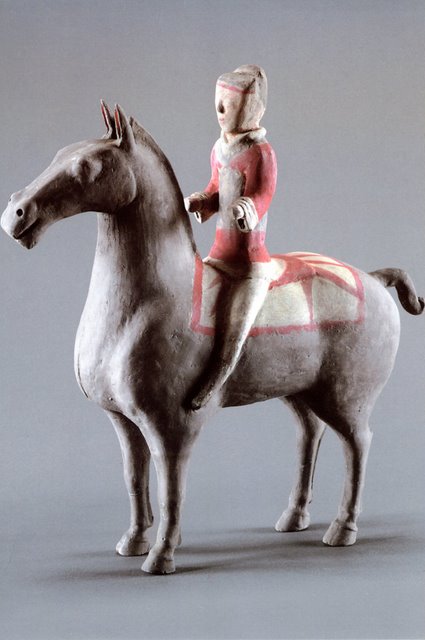
Cina - Nascita di un impero

Sono appena stato a vedere la mostra alle Scuderie del Quirinale, "Cina, Nascita di un Impero", ed è meravigliosa. Consiglio a tutti di andarla a vedere!



Thursday, August 03, 2006
Oscar Peterson - The Final Concerts

| The Final Concerts The May 29, 1965 concert marks the final performance of the finest piano trio in jazz history, featuring pianist Oscar Peterson, bassist Ray Brown and drummer Ed Thigpen. The quartet performed eight outstanding tracks, which included five modern jazz standards and three original Peterson compositions - "The Smudge", "Lovers Promenade" and "Children's Tune". This edition also includes the outstanding London, October 1, 1964 concert featuring the trio in full swing on five modern jazz standards and four more Peterson compositions including: "Hallelujah Time", "Place St. Henri", "Nightingale" and "Reunion Blues". | |
 | |

Wednesday, July 26, 2006
Ike Turner - Risin' with the Blues
Ike Turner
Risin' with the Blues
Zoho Roots 200611
Street Date: September 14, 2006

There is no denying Ike Turner’s place in musical history. While the general public may know about his heyday with the Ike & Tina Turner Revue during the ‘60s (a meteroic rise to fame that peaked with their early ‘70 hits “Proud Mary” and “Nutbush City Limits”), only hardcore Ike fans and jump blues enthusiasts are aware of him spearheading the formative years of rock ‘n’ roll with the 1951 hit “Rocket 88”(cut in Memphis by his Kings of Rhythm but issued on Chicago’s Chess Records label under the name Jackie Brenston and his Delta Cats). Few know of Turner’s role as a kind of super talent scout of the South during the 1950s for both the Chess brothers of Chicago’s Chess Records or the Bihari brothers of Los Angeles’ Modern/RPM Records. Fewer still know of Ike’s participation on several early ‘50s RPM recordings by B.B. King (including his piano accompaniment on King’s 1951 hit “Three O’Clock Blues” and his 1952 followup “You Know I Love You”), his playing second guitar on classic 1958 Cobra sessions for Buddy Guy and Otis Rush (including Rush’s signature pieces “Double Trouble” and “All Your Love (I Miss Loving)”), or hammering the 88s behind the likes of Howlin’ Wolf, Muddy Waters, Elmore James, Little Walter, and Willie Dixon during the 1950s.
While playing as a house pianist in West Memphis "blacks only" blues clubs, Ike often snuck in a young white truck driver to sit next to the piano to study Ike's boogie style and dance moves: that kid was Elvis Presley.
In the 1960's, Ike's influence on several of the most recognized names in Rock continued: Janis Joplin sought Turner for vocal coaching, and a young Jimi Hendrix played in Ike's Kings of Rhythm for a time. As a teenager, Bonnie Bramlett was briefly a member of the Ikettes, prior to starting her own rise to stardom a few years later.
In retrospect, Ike’s early innovations seem to have been overshadowed by his notoriety in later years. Following the breakup of Ike & Tina in 1976, Turner entered a dark period of self-imposed exile marked by his heavy cocaine addiction. “I just went into a 15-year party,” is how he put it. The ‘90s were further marred by his incarceration for cocaine possession at the outset of the decade and the public besmirching of his name by the 1993 movie What’s Love Got To Do With It?, which portrays Tina’s take on their tumultuous 18-year relationship. But like the mythical phoenix, Ike would eventually rise from the ashes of his fallen career and begin life anew.
With 2001’s triumphant Here and Now, one thing was eminently clear: the swagger was back in Ike Turner’s stride. That comeback album took critics by surprise,
proving that, at age 70, he still had plenty of fire left to give. The album received a GRAMMY nomination for "Best Traditional Blues album" in 2001, and a 2002 W.C. Handy Blues Award in 2002.
On Risin' with the Blues, the R&B icon and Rock & Roll Hall of Famer takes the intensity level up a notch or two with typically slashing-stinging guitar work, rollicking boogie woogie piano flourishes and some of the nastiest, rawest, most potent vocals he’s ever summoned up in a fabled career that dates back more than 50 years.
“All my life I was afraid to come out front and sing,” says the longtime bandleader who throughout his career stood behind a dynamic front person, whether it was Jackie Brenston, Billy Gayles or Clayton Love in the early years or Tina Turner during the ‘60s and ‘70s. “I don’t know whether I was too bashful to sing it myself on stage, I just liked it better in the background.”
Ike is in the background no more. Throughout Risin'with the Blues, he wails with ferocious authority as the vocal front man while wielding a wicked ax and pumping the piano keys with the energy of a man half his age. On an ultra-funky update of Hound Dog Taylor’s “Gimme Back My Wig,” he snarls his way through the humorous lyrics while on a powerful horn-fueled reading of Eddie Boyd’s “Five Long Years” (retitled here as “Eighteen Long Years” to commemorate the span of Ike’s marriage to Tina), he screams with cathartic abandon. On the infectious shuffle blues “Tease Me,” Ike gets downright menacing, then turns around and delivers the country flavored ballad “A Love Like Yours” with rare poignancy and emotional depth.
Turner cuts a wide stylistic swath on this powerhouse outing. There are bits of jazz extrapolation here in his instrumental “Mix It Up/Jazzy Fuzzy” and also on a faithful reading of Horace Silver’s “Senor Blues.” The urgent “I Don’t Want Nobody” is a dance floor number coming directly out of the Zapp-Bootsy Collins playbook while the (country blues) gospel flavored “Jesus Loves Me” has Turner testifying with evangelistic zeal. As he says of that confessional offering, “Behind all the crap that they said I been through, it’s like, ‘You can call me a bad boy, but when you get to calling me a bad boy, Jesus loves me anyway.’ And that’s the truth.”
On a rousing rendition of Louis Jordan’s 1946 hit “Caldonia” (cut when Ike was an impressionable 15-year-old growing up in Clarksdale, Mississippi), he pays tribute to a jump blues hero of his youth. “That’s my favorite guy, Louis Jordan,” he says. “I grew up with his music -- all those tunes I heard on the jukebox like ‘Caldonia,’ “Let The Good Times Roll’ and “Choo Choo Cha Boogie.’ That was a golden era, man! I was born in 1931 so I came up with all those great tunes by cats like Joe Liggins (1945’s “The Honeydripper”) and Jimmy Liggins (1947’s “Cadillac Boogie”), Roy Brown (1947’s “Good Rockin’ Tonight”), T-Bone Walker (1947’s “Stormy Monday Blues”) and Amos Milburn (1948’s “Chicken Shack Boogie”). That was my music, man! And when I finally formed the Kings of Rhythm, we were doing our own versions of all that stuff, just trying to put our own twist on it.”
Elsewhere on Risin' with the Blues, Turner’s guitar stings with a vengeance on “Rockin’ Blues,” he belts out vocals in robust style on “Goin’ Home Tomorrow” (a New Orleans flavored stroll reminiscent of Earl King’s “Those Lonely, Lonely Nights”) and digs into some downhome fingerstyle blues guitar work on the humorous “Big Fat Mama.” The funky instrumental “Bi Polar” showcases both Ike’s guitar and piano prowess while the organ-fueled closer, “After Hours,” is an Erskine Hawkins slow blues that highlights Ike’s soulful restraint on the ivories.
“Everything you hear on this record comes directly from the heart, man,” maintains the man who has been firmly rooted in the real-deal for over 50 years. “This whole album is about feeling.”
Amen to that. -- Bill Milkowski
Bill Milkowski is a regular contributor to Jazz Times and Jazziz magazines. He is also the author of “JACO: The Extraordinary and Tragic Life of Jaco Pastorius” (Backbeat Books) and “Swing It! An Annotated History of Jive” (Billboard Books)
Label Website: www.iketurner.com/
ZOHO™ is distributed by Allegro
Zoho Media contact:
Jim Eigo Jazz Promo Services T: 845-986-1677 /
Thursday, July 20, 2006
Jazz News: Monterey Jazz Festival Announces 2006 MJF County High School All-Star Band
Posted: 2006-07-20
MONTEREY JAZZ FESTIVAL ANNOUNCES 2006 MJF COUNTY HIGH SCHOOL ALL-STAR BAND
EDUCATIONAL WORKSHOPS, CULTURAL EXCHANGES AND PERFORMANCES HIGHLIGHT TWO-WEEK TOUR OF JAPAN, JULY 25 - AUGUST 7
TOUR STARTS WITH PERFORMANCE AT THE NATIONAL STEINBECK CENTER IN SALINAS, JULY 24
Monterey, California; Since its inception in 1958, the Monterey Jazz Festival has invested its proceeds in education, providing a series of innovative music programs for young people. Over $500,000 is invested annually in the MJF's year-round jazz education programs, funded through a combination of Festival ticket revenue, grants, corporate sponsorship and individual contributions. The MJF investment in jazz education has paid off handsomely--recognizing, rewarding and nurturing the best and brightest young jazz musicians in the country.
In addition to the Monterey Jazz Festival's Next Generation Jazz Orchestra (which performed at the Jazz Standard in New York City, the International Music Festival in Dubrovnik, Croatia, and the Umbria Jazz Festival in Perugia, Italy from July 9-16, and will appear at the 49th Annual Monterey Jazz Festival) the Monterey Jazz Festival has announced the members of the 2006 MJF County High School All-Star Band, the best and brightest student musicians from the Festival's home county.
Directed by renowned saxophonist and flautist Mr. Paul Contos, the 21-member MJF County High School All-Star Band features the finest young jazz musicians from high schools throughout Monterey County. Participants in the 2006 MJF County High School All-Star Band hail from the Monterey, Gonzales, Carmel, Everett Alvarez, Pacific Grove, Salinas, Palma/Notre Dame, Santa Catalina, and York High Schools, representing the cities of Monterey, Carmel, Salinas, Pacific Grove and Gonzalez. The students provide a glimpse into the future of jazz, and will partake in the festival's unique and exciting educational programs.
Since its creation, the MJF County High School All-Star Band has participated in a series of international concerts and cultural exchange programs, and will return to Monterey's sister city of Nanao, Japan from July 25 to August 7, 2006. Seven public concerts and workshops with Japanese high school students are scheduled at schools in Nanao, Senzoku University in Yokohama, the Tomisato Jazz Festival, and the Monterey Jazz Festival in Noto.
“This tour is an amazing experience for the students of Monterey County to participate in a unique cross-cultural program,” said Dr. Rob Klevan, Education Director for the Monterey Jazz Festival. “The exchange of knowledge and the experience of the tour will have a life- long impact on the students, not only broadening their musical horizons, but also expanding their knowledge and understanding of different cultures. Music is a universal language, and the tour will stay with the kids forever.”
Prior to their departure on the tour of Japan, the MJF County High School All Stars will perform on Sunday, July 23 at 7 PM at the National Steinbeck Center in Salinas. Tickets are $10, and advance purchase is recommended. Please call (831) 775-4721 for more information.
With educational programs such as the MJF County High School Honor Band, the MJF County Middle School Honor Band, and the Next Generation Jazz Orchestra, the Monterey Jazz Festival continues to change lives through jazz education and spread America's original art-form, jazz, from Monterey to the world.
The Monterey Jazz Festival's Jazz Education Programs are made possible in part through the generous support from the National Endowment for the Arts, the Monterey Jazz Festival Commissioned Artist Program, the Monterey Jazz Festival Artist-in-Residence Program, the NEA/Jazz Masters on Tour Program, Verizon in partnership with Arts Midwest, and the Doris Duke Charitable Foundation through a grant to Chamber Music America. The Monterey Jazz Festival is also proud to thank the William and Flora Hewlett Foundation and many other generous grantors and individuals who support MJF's year-round youth jazz education programs.
The 2006 MJF County High School All-Star Band
Director
Mr. Paul Contos
Saxophones
Corey Watkins - alto, Monterey High School
Chris Lopez - alto, Gonzales High School
Emily Neff - tenor, Monterey High School
Kevin Call - tenor, Carmel High School
Kyle Murchison - baritone, Carmel High School
Trombones
Dakota Bell, Monterey High School
Davis Giedt, York School
Zachary McDaniel, Salinas High School
Kristen Rosa, Everett Alvarez High School
Justin Widmar (bass), Carmel High School
Trumpets
Daniel Bean, York School
Karl Gramespacher, Monterey High School
Conor Jones, Carmel High School
Kari McLaughlin, Palma/Notre Dame High School
Andrew Shepherd, Salinas High School
Rhythm
Emily Intersimone - piano, Santa Catalina School
Zach Parkes - bass, Carmel High School
Brice Albert - guitar, Monterey High School
Patrick Daniel - drums, Pacific Grove High School
Ross McCafferty - drums, Carmel High School
Sam Skemp - vocals, Monterey High School
Star Trek: Animated - Official Announcement, EXTRAS!!! & Package Art (WAAAY DIFFERENT Than Early Art!)

The other day we had the official announcement that Paramount would release Star Trek: The Animated Series - All 22 Episodes of the Animated Adventures of Gene Roddenberry's Star Trek. This 4-DVD set arrives on November 21st, in a spiffy package (see below) for just $35 SRP. We've already listed the confirmed extras that you can be sure to find on this release, but here they are again:
- "Drawn to the Final Frontier - The Making of Star Trek: The Animated Series"
- "What's the Star Trek Connection?"
- Photo Gallery
- Show History
- Wallpaper
- AIM Icons
- Text Commentaries by Michael Okuda and Denise Okuda ("Yesteryear," "The Eye of the Beholder," "The Counter-Clock Incident")
Notice, though, that the announcement said "confirmed extras". Not necessarily the complete list, then? Right you are! Because we've gotten word from folks in-the-know that more bonus material is on the way, and some of it's just been recorded, or about to be recorded!
TVShowsOnDVD has learned that Interviews and Commentary Tracks with the people behind the scenes of these animated adventures are being produced! Filmation's Lou Scheimer is part of this, and so is Director Hal Sutherland. Associate Producer/Story Editor/"Yesteryear" Writer D.C. Fontana is also supposed to be involved, we hear.
And YOU willl hear from Russell Bates and David Wise, the Peabody Award-winning Co-Writers of the episode "How Sharper Than A Serpent's Tooth". Writer David Gerrold is also going to be found on these DVDs, talking about his episodes "BEM" and the Cyrano Jones sequel, "More Tribbles, More Troubles". We've also heard that Judith and Garfield Reese-Stevens (Enterprise Writers/Co-Producers, and also Co-Authors of The Art of Star Trek) may also be on hand, to discuss their perspective on the show's place in Trek history. It's also possible that Walter Koenig himself (who did NOT voice act in The Animated Series, but rather was the Writer of the episode "The Infinite Vulcan") might make the scene.
Anything we sound unsure of, treat it as a rumor. There's only a few of those names that we're absolutely sure about. The rest are "maybes". If we get a definite list, we'll be back to provide it to you.
Scheimer and Gerrold also did some misc. voice acting on a few of these episodes, so keep a sharp ear out for them! Also, don't forget that the second-season episode "The Practical Joker" was the very first time we saw the "recreation room", which was the first ancestor of what became TNG's "holodeck". In case you don't remember, McCoy and Sulu and Uhura got trapped in there, in a number of changing dangerous conditions, including a blizzard! It's all part of the complete Animated Series DVDs! Here's another look at the packaging:
14. Rendere accessibile tutto il sapere - I Barbari - Repubblica.it
di Alessandro Baricco
O almeno non è tutto il sapere. Per quanto derivata, spesso, da una certa incapacità a usare Google, è un'obbiezione sensata: ma non illudetevi troppo. Pensate che non sia stato lo stesso per la stampa e Gutenberg? Avete in mente le tonnellate di cultura orale, irrazionale, esoterica che nessun libro stampato ha mai potuto contenere? Ci pensate a tutto quello che è andato perso perché non entrava nei libri? O a tutto quello che ha dovuto semplificarsi e addirittura svilirsi per riuscire a diventare scrittura, e testo, e libro? Eppure, non ci abbiamo pianto troppo sopra, e ci siamo assuefatti a questo principio: la stampa, come la rete, non è un innocente contenitore che ospita il sapere, ma una forma che modifica il sapere a propria immagine. E' un imbuto dove passano i liquidi, e tanti saluti, che so, a una palla da tennis, a una pesca o a un cappello. Che piaccia o no, è già successo con Gutenberg, risuccederà con Page e Brin.
Dico questo per spiegare che se qui parliamo di Google non stiamo parlando di una robetta curiosa o di una esperienza come un'altra, tipo il vino o il calcio. Google non ha nemmeno dieci anni di vita, ed è già nel cuore della nostra civiltà: se tu lo spii non stai visitando un villaggio saccheggiato dai barbari: sei nel loro accampamento, nella loro capitale, nel palazzo imperiale. Mi spiego? È da 'ste parti che, se c'è un segreto, tu puoi trovarlo.
Così diventa importante capire cosa, esattamente, fecero quei due che nessuno prima aveva immaginato. La risposta giusta sarebbe: molte cose. Ma è una, in particolare, quella che, per q"
Rare Concerts Bring 'Jazz Icons' To Life
Louis Armstrong
July 18, 2006, 2:15 PM ET
Jonathan Cohen, N.Y.
Rare concerts from jazz legends Thelonious Monk, Count Basie, Art Blakey, Chet Baker, Ella Fitzgerald, Dizzy Gillespie, Quincy Jones, Buddy Rich and Louis Armstrong will be released for the first time on DVD Sept. 26 via Reeling in the Years Productions and TDK Recording Media Europe S.A.

The shows were filmed in Europe between 1957-1978 both in TV studios and traditional concert venues, and in many cases, have never been broadcast, even in excerpts. They are being issued under the heading 'Jazz Icons,' with distribution by Naxos of America.
Among the highlights of the first batch of titles are a 1958 show with Blakey and a lineup of his Jazz Messengers that only played together for six months, Fitzgerald concerts from 1957 in Belgium and 1963 in Sweden, Monk shows in Norway and Denmark from 1966 and two Jones concerts from 1960, featuring an 18-piece band.
Baker is featured in a 1964 performance for Belgian television and a 1979 performance in Norway, while the 1959 Armstrong show is one of his only known complete filmed performances from this era."
"From an educational standpoint this series is a gift to our culture," Jones says. "I'm honored to be a featured part of it, but I'm more thrilled just to sit down and watch it with my grandkids."
Sunday, July 09, 2006
Comedian Dave Jory's favourite gadget is his Sony MZ-810 MiniDisc recorder.

A lot of comedians, especially when they are starting out, like to record their gigs to listen to them later. I bought mine about three years ago.
It cost me $700. A lot of comics were using old micro-cassette recorders, so I thought a MiniDisc was cutting edge.
Unfortunately, they were like Laser Discs (remember them?). No one uses MiniDisc. Even the Amish consider MiniDisc technology "quaint".
But it cost me so much and the sound quality is great, so I'm sticking with it until it decides to stop working. Unless Antiques Roadshow offers to buy it from me first.
Is your MiniDisc like Arnold Schwarzenegger in Terminator 3 - obsolete?
Arnie's problem in Terminator 3 wasn't that he was obsolete. It was that nobody wants to see a 60-year-old muscleman walking around with no clothes on.
Where does old technology go to die? There must be somewhere all those old Commodore 64s and Ataris ended up?
They might just be landfill. But it's more likely that they're somewhere plotting to destroy mankind and take over the planet. That will be the real rise of the machines.
Describe your weirdest gig.
I was hired as the comedian for this girl's 30th birthday. It was a very small party, only about 10 guests, in a little flat. I remember the TV was on in the background. There was no stage and no microphone, so I just stood next to the couch and everyone stared at me while I did my act for 20 minutes. There was a smattering of applause, the birthday girl paid me and I left.
Julie Hardy at Cornelia Street Cafe, Tuesday, July 11th
As the only American vocalist currently signed to Fresh Sound New Talent records, Julie Hardy is well on her way to becoming one of the most important voices of the modern jazz scene. Hardy's debut CD, "A Moment's Glance" was released in April 2005 to critical acclaim. This innovative record combines fresh interpretations of standards and pop classics with sophisticated original compositions, and showcases Hardy's diverse talents as an improviser and an interpreter of lyrics. She is joined by Rob Stillman, tenor saxophone and Randy Ingram, piano. Ben Street, bass, and Adam Cruz, drums (of the Danilo Perez trio) round out the ensemble.
Last year Hardy released "A Moment's Glance" to a full house at the Jazz Standard in New York City. She was also selected to perform at the Diet Coke Women in Jazz Festival at Jazz at Lincoln Center.
Hardy grew up in Fremont, New Hampshire and holds a Masters degree in Jazz Performance from the New England Conservatory of Music. In 2002 Hardy was one of two vocalists in the nation invited to participate in the Jazz Academy Snowmass in Aspen, CO directed by Christian McBride. The following year Hardy was chosen to attend the Betty carter Jazz ahead program where she performed her original composition at the Kennedy center in Washington, D.C.
This year Hardy has been acknowledged for her talent as a composer by receiving the 2006 ASCAP Young Jazz Composers Award for her composition "No Turning Back" which is featured on her recent Fresh Sound release.
Monday, June 19, 2006
Cake...
Così è stato: dalle venti simpatizzanti che si aspettavano alle porte della discoteca affittata per l'occasione, Emily e Melinda si son ritrovate circondate da oltre duecento donne. Tutte entusiaste. Da allora. Cake organizza workshop, lezioni di sesso, incontri di vario genere e un party al mese. In cui si parla di tutto. E si mette anche in pratica qualcosa: si guardano film porno per far scoprire alle donne che la stimolazione visiva può essere eccitante anche per loro, si esaminano i vari sex toys sul mercato e chi vuole li può testare; si parla di depilazione intima; si spiega che cos'è l'eiaculazione femminile e si assiste a una dimostrazione pratica. Insomma, si mette da parte ogni pudore: «Tutte devono sentirsi a proprio agio, in un ambiente accogliente, che non le giudica», spiega Emily. «La vita delle donne, nella quotidianità, è fatta per lo più di accettazione. Forse la nostra generazione sta davvero facendo scoprire al mondo l'esistenza di una sessualità precisa, che deve emergere, e di cui dobbiamo essere libere di parlare. Quando ci riuniamo, ci sono così tante cose di cui le donne vogliono discutere! Orgasmi, partner, percezione del proprio corpo, fantasie sessuali (e le donne ne hanno tantissime)... Non c'è mai un attimo di silenzio». Ma è durante le feste che si assiste a quella che le fondatrici di Cake definiscono una vera e propria liberazione della femminilità. «Ogni evento ha un tema diverso», spiega Melinda, «ma l'obiettivo di tutte le serate è celebrare la sessualità femminile in modo interattivo. Non si fa sesso in pubblico, assolutamente, e i nostri party non hanno niente a che vedere con gli scambi di coppie. Diamo alle donne la possibilità di esplorare diversi aspetti del sesso attraverso un argomento specifico, che può essere lo striptease, la lap dance, la stimolazione visiva, l'esibizionismo... Il nostro motto è: vieni in discoteca, divertiti, eccitati e il resto fallo a casa. Non sono sex party, ma sexy party». I maschi sono ammessi solo se accompagnati da una donna che garantisca per loro e che faccia parte dell'associazione. Cento dollari per l'iscrizione annua. Ma per essere ammesse, bisogna anche scrivere qualcosa di sé che abbia a che vedere col sesso. Le socie sono 500. 25 mila le iscritte alla newsletter. «Cerchiamo», spiega Melinda, «di portare nel gruppo uomini illuminati e intelligenti. Alcuni sono l'intrattenimento stesso della serata: spogliarellisti, ballerini, ragazzi assoldati per essere l'oggetto sessuale delle donne in sala. Poi ci sono i mariti o i conoscenti. Qualcuno incoraggia le amiche timide, altri vengono per divertirsi, imparare, ballare con le mogli e spogliarsi con loro sul palco (mai completamente, però, sia chiaro: niente nudo ai Cake party). Non si può celebrare la sessualità femminile ignorando gli uomini». Aggiunge Emily: «Poi c'è la comunità gay, che ha una vita notturna attivissima e alternativa, molto esplorativa nei confronti del sesso. Che non pensa, però, alle esigenze delle donne etera». Le ragazze che frequentano i party sono entusiaste. Erica, 20 anni, fotografa e studentessa universitaria, lo conferma: «Non me ne perderei uno per niente al mondo. Il clima è di divertimento e provocazione, si respira apertura mentale, c'è intrattenimento. Si percepisce davvero uno spirito comunitario. Di solito, alle feste nei club, ti senti un po' osservato. Tutti sono troppo preoccupati di essere fichi, di fare le mosse giuste, di essere vestiti alla moda. Non c'è dialogo, nessuno parla realmente con nessuno, trovi gente che si ubriaca da sola in un angolo...
Ai party di Cake questo non succede. Ci sono tante altre donne, spiritose e attente, con cui chiacchierare, e poi i ballerini e le ballerine, e a volte performance impreviste, per esempio spogliarelli, scenette bondage... Una ragazza una volta era immersa in una piscina di plastica, e giocava con le bolle di sapone insieme al pubblico. La cosa più folle che ho fatto? Coccole di gruppo con 4 persone allo stesso tempo. Ma niente di sconvolgente. Anche perché la filosofia non è la trasgressione, ma il gioco alla scoperta di se stesse».
Dominique, di origini italiane, ha 29 anni, lavora per un'organizzazione no profit e alle feste va con il marito: «Ho scoperto il mio lato esibizionista, e sono diventata una ballerina fissa per Cake. Compro i costumi, invento coreografie, do sfogo alla creatività facendo cose sempre diverse. Gelosia tra me e lui? Nessuna, siamo una coppia aperta, lo sono bisessuale, e a volte frequento altre donne; la stessa cosa la fa mio marito. Quella di ballare, essere sexy e intrattenere gli altri con la fantasia, e senza mai essere volgare o esagerare, è una sfida che mi piace. Sì, lo so, molte donne hanno problemi con la sessualità, o addirittura non hanno mai avuto un orgasmo. Sono donne che non sanno esplorare, che non sono abituate a dire al partner cosa vogliono. Cake ti incoraggia a entrare in contatto con i tuoi desideri e il tuo corpo, a parlarne con il tuo uomo, ad ascoltare altre donne e imparare da loro». Tutte felici? Non proprio. Le femministe sono furiose: tanto per cominciare, sostengono che non si debbano guardare i film porno, perché sviliscono la donna. Poi, che le ragazze, esibendosi ai Cake party, si trasformano in oggetti sessuali. Infine accusano Emily e Melinda di essere novelle Hugh Hefner, il fondatore di Playboy, e di sfruttare il loro genere per fare soldi. Le due non si scompongono: il porno esiste e non lo si può negare. Cake cerca di fare in modo che l'industria dell'hard rispetti le attrici e prenda in considerazione i desideri del pubblico femminile. «Le accuse sulle donne oggetto sono anacronistiche, non tengono conto delle fantasie delle ragazze di oggi (età media delle Cake-girls: 20-39 anni, ndr)», osserva Melinda. «Tanto per cominciare, conduciamo noi il gioco, decidiamo che cosa succede, cosa ci piace e cosa no. Molte amano salire sul palco, esprimere la sessualità attraverso uno show, perché negarglielo?». «Le battaglie delle femministe», conclude Emily, «non si possono fermare agli stupri e alle quote rosa. Ci dev'essere parità nel piacere. Poi va tenuta in considerazione l'evoluzione della sessualità femminile. Al di là dell'esibizionismo, per esempio, c'è un trend decisamente crescente: quelle che, pur non essendo gay né bisex, vogliono provare a fare sesso con un'altra donna. Per il gusto di sperimentare. Sotto l'etichetta di etero c'è molto di più, ignorarlo fa male alle donne, le reprime invece di liberarle».
E i maschi, che dicono? Osservano e si costruiscono un bagaglio culturale da condividere con altre compagne, perché un mondo di sesso migliore è possibile. «E poi», osserva uno. «è sempre meglio che stare a casa a guardare la tv».
